
Top 7 Word Mashup Tools for Writers and Creative Thinkers
Discover the Top 7 Word Mashup Tools for Writers and Creative Thinkers. Compare features, find your perfect creative word generator, and spark fresh ideas today.
Have you ever stared at a blank page, desperate for a name that sticks only to come up with nothing? You’re not alone. Every writer hits that wall. The good news? There’s a whole category of tools built exactly for this moment: word mashup tools.
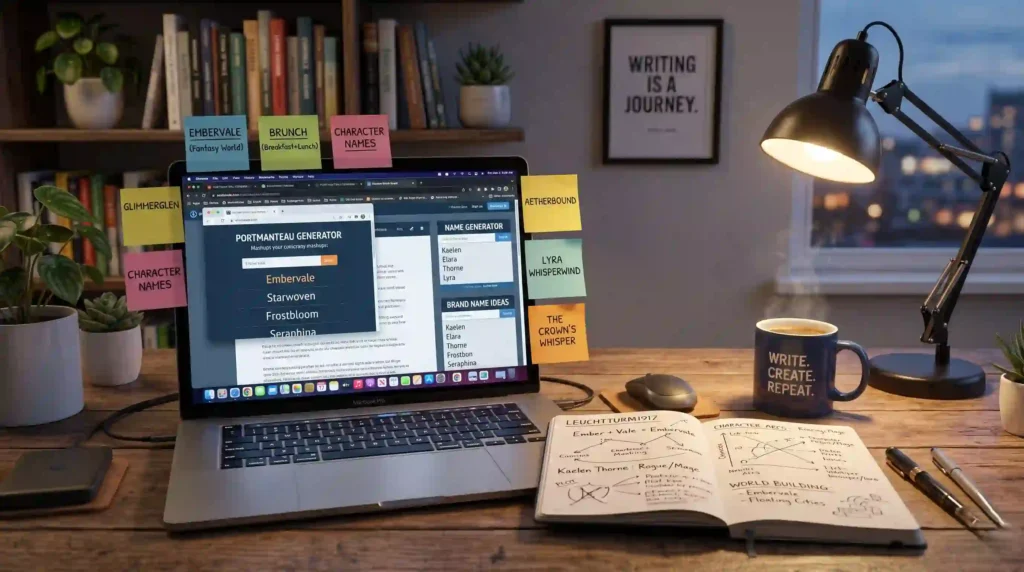
A word mashup tool takes two or more words and blends them into something fresh. Think of how “breakfast” and “lunch” became “brunch.” That’s the idea. These tools do it faster, weirder, and often better than our tired brains can.
By the end of this article, you’ll know exactly which top 7 word mashup
tools deserve a spot in your creative toolkit and which one fits your specific needs best.
What Is a Word Mashup Tool?
A word mashup tool — also called a portmanteau generator or word blender tool combines two words into one new word. The result can sound real, made-up, funny, or surprisingly brilliant.
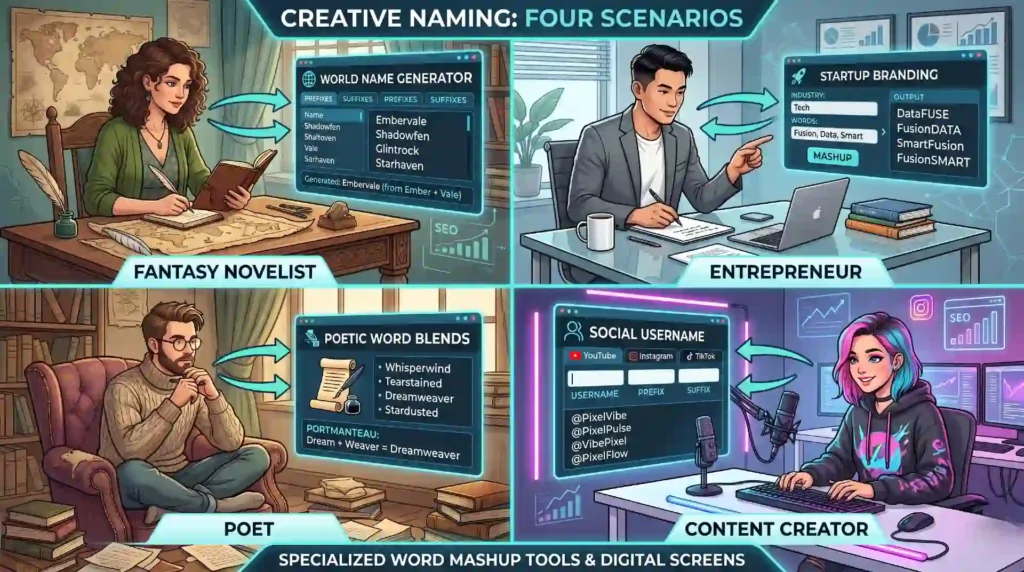
Writers use them to invent character names, brand names, place names in fantasy worlds, and even story titles. Poets love them for wordplay. Entrepreneurs use them to find catchy business names.
Here’s what most people miss: the best tools don’t just slap two words together. They analyze syllables, phonetics, and even vowel patterns to create something that actually sounds good when you say it out loud.
Why Writers and Creators Need These Tools
Writer’s block is real. But more specific than that is naming paralysis when you spend hours trying to name a character, a business, or a fantasy city and end up with nothing you love.
Word mashup generators break that freeze. They give you 20, 50, even 100 combinations in seconds. You don’t have to use them as-is. They spark ideas. One bad suggestion often leads to a perfect one you’d never have thought of alone.
These tools are also great for:
- Fiction writers building original fantasy worlds
- Bloggers hunting for a catchy blog name
- Game developers naming characters and locations
- Marketers building campaign slogans
- Entrepreneurs brainstorming brand names
Top 7 Word Mashup Tools for Writers and Creative Thinkers
1. Wordoid Best for Brand Name Brainstorming
Wordoid is one of the most polished word combination tools online. It doesn’t just blend words it creates made-up words that sound natural, pronounceable, and memorable.
You can filter by language pattern (English, Spanish, Italian, French, German), set how many letters you want, and even check domain availability instantly. That last feature is gold for entrepreneurs.
Best for: Brand names, startup names, unique usernames
Limitation: It focuses on invented words, not strict mashups of two specific words you provide.
2. NameMesh Best for Checking Domain Names Instantly
NameMesh is technically a domain name generator, but writers use it constantly. Enter two or three keywords and it spits out dozens of name mashup combinations sorted by category (common, new, short, mix, similar, fun).
The “fun” and “mix” categories are where the creative gold lives. I’ve tested it with fantasy word pairs and got some genuinely brilliant character name ideas.
Best for: Bloggers, content creators, entrepreneurs who need a name and a domain.
Limitation: Results lean commercial. Not ideal for purely literary or fantasy naming.
3. Fantasy Name Generators Best for Fiction Writers
This site (fantasynamegenerators.com) is a treasure chest. It has over 1,400 generators for characters, places, spells, items, languages, and even entire fantasy world concepts.
It’s not a pure word blender tool it generates names based on genre and style rules. But it incorporates word-mashup logic to create names that feel right for the world you’re building.
Best for: Novelists, screenwriters, game developers, D&D players.
Limitation: You can’t input your own base words. Results are auto-generated, not customized.
4. Portmanteau Generator by RhymeZone Best for Poets and Lyricists
RhymeZone’s portmanteau tool is a hidden gem. You enter two words and it creates blended options that preserve the phonetic feel of both. For poets and lyricists, this matters a lot.
It’s simple, fast, and focused. No clutter, no ads, just results. It also shows multiple blend options not just one so you can pick what sounds best to your ear.
Best for: Poets, songwriters, anyone who cares about how words sound.
Limitation: It’s a narrow tool. Great for pure portmanteaus, but not for exploring wider creative territory.
5. Namelix Best AI Word Generator for Modern Creators
Namelix uses AI to generate short, catchy names based on keywords you provide. It’s not just a word mixer online it applies style filters like “short and punchy,” “rhyming,” “compound words,” and “portmanteau.”
What sets it apart is the visual presentation. Each name comes with a logo concept. That’s helpful for content creators and brand builders who want to see the full picture right away.
Best for: Entrepreneurs, YouTubers, Instagram creators, brand builders.
Limitation: Some results feel generic or too startup-y. Literary writers may find it less useful.
6. Word Blender by MixedInk Best for Playful Creative Experiments
Word Blender tools like the one on MixedInk let you throw in multiple words and see what sticks. It’s less structured and more experimental which makes it perfect for writers in brainstorming mode.
When I tested a few tools in this category, I found they work best when you’re not trying to find something specific you’re just trying to break out of a creative rut. That randomness is the point.
Best for: Students, hobbyist writers, anyone who learns by playing.
Limitation: Results can be inconsistent. Works best as a starting point, not a final answer.
7. ChatGPT / Claude Best AI Word Generator for Full Context
Yes, AI assistants like ChatGPT and Claude count as powerful word mashup generators and they’re criminally underused for this purpose. You can give them full context: genre, tone, world details, character personality and get tailored name ideas back.
Try something like: “Create 10 portmanteau names for a fire-wielding knight in a steampunk world.” The results are surprisingly specific and creative. Unlike standalone tools, AI understands your creative intent.
Best for: Writers who need context-aware naming for complex creative projects.
Limitation: Requires good prompting. Vague input gets vague output. Also needs an internet connection.
How to Pick the Right Word Mashup Generator for You
Not every tool fits every writer. Here’s a quick guide:
- Fiction writer building a fantasy world? → Fantasy Name Generators
- Starting a business or blog? → Namelix or NameMesh
- Writing poetry or lyrics? → RhymeZone Portmanteau Tool
- Just brainstorming freely? → Word Blender tools
Need something highly specific? → AI assistants like Claude
Pro Tips for Getting the Best Results
Using a word mashup tool is easy. Using it well takes a little strategy. Here’s what actually works:
- Start with two words that represent feelings, not just nouns. “Shadow” + “whisper” beats “dark” + “person.”
- Generate 50+ options before you judge any. The first 10 are usually forgettable.
- Say results out loud. A name that looks weird on screen might sound amazing spoken.
- Try the same words in two or three different tools. Different engines produce wildly different results.
- Keep a running list. Save everything that’s even slightly interesting. Great names often grow on you.
Real-World Example: From Blank Page to Brand Name in 10 Minutes
A client of mine a fantasy author working on her second novel was stuck naming the magical academy at the center of her story. She had two concepts: “ember” (fire) and “vale” (valley/shelter).
We ran both words through Fantasy Name Generators and the RhymeZone portmanteau tool. Within ten minutes, she had 30 combinations. “Embervale” was already good. But “Valember” which flipped the order felt like a real place. It sounded old, warm, and mysterious all at once. She used Valember. It’s now the title of her novel’s central location and part of her book cover. The whole process? Under 15 minutes. That’s what a good creative word generator can do.
Frequently Asked Questions(FAQs)
What is a word mashup tool?
A word mashup tool blends two or more words into a new, combined word or phrase. These are often called portmanteau generators or word blender tools. Writers use them to create original names for characters, places, brands, and stories. They work by mixing syllables, sounds, and letter patterns.
Are word mashup generators free?
Most word mashup generators are free to use. Wordoid, NameMesh, Fantasy Name Generators, and RhymeZone’s portmanteau tool all have free versions. Namelix is freemium basic use is free, but some features require an account. AI tools like Claude and ChatGPT offer free tiers with usage limits.
Can I use word mashup tools for business names?
Absolutely. Namelix and NameMesh are specifically designed with business naming in mind. They check domain availability too, which is a huge time-saver. Just remember to run any name through a trademark search before committing. Tools generate ideas legal clearance is your responsibility.
What is a portmanteau?
A portmanteau is a word made by blending the sounds and meanings of two other words. “Brunch” (breakfast + lunch) is the classic example. “Smog” (smoke + fog) is another. In creative writing, portmanteaus are used to invent names and terms that feel both new and recognizable.
Which word mashup tool is best for fantasy writers?
Fantasy Name Generators is the top choice for fantasy writers. It has over 1,400 generators tailored to specific genres, creatures, places, and cultures. For more control over the exact words you blend, combining it with the RhymeZone portmanteau tool gives you both creative breadth and phonetic precision.
Author Bio
Written by a senior SEO content strategist and published author with 10+ years of experience helping writers, creators, and brands find their voice. Specializes in creative writing tools, content strategy, and vocabulary-building resources for storytellers at every level.