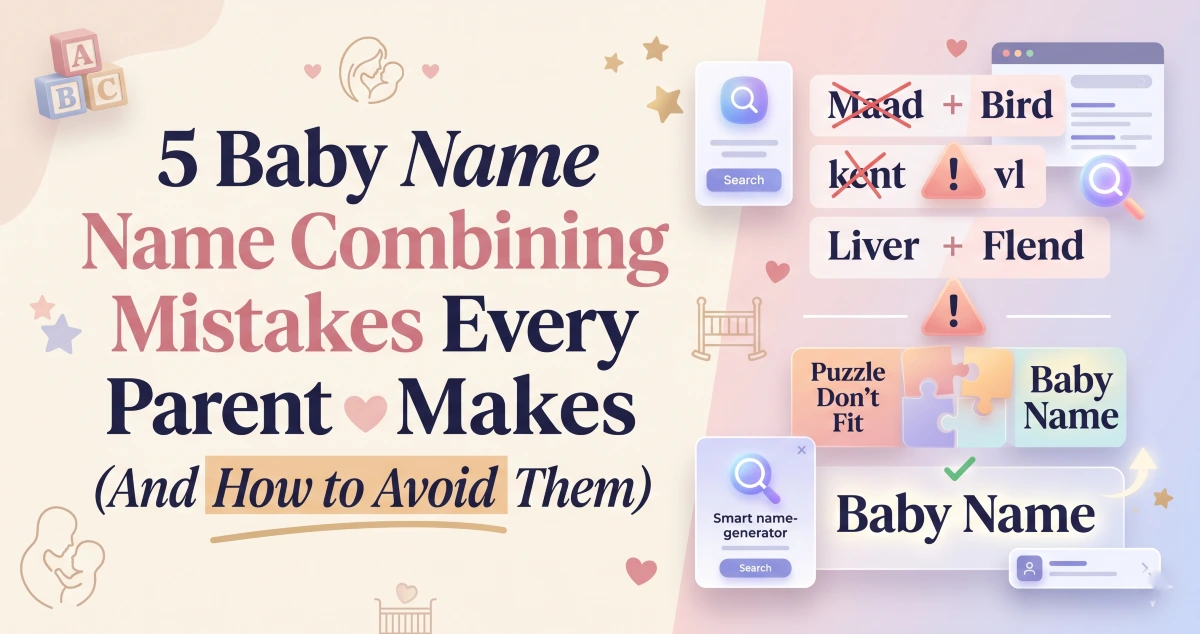
5 Baby Name Combining Mistakes Every Parent Makes (And How to Avoid Them)
Baby name combining sounds simple. Enter two names. Press generate. Pick one. Done.
But spend any time in parenting communities and you’ll hear the same regrets. Names that looked great but sounded wrong. Names that spelled something unfortunate in another language. Names that everyone in the family mispronounces differently. These aren’t rare outcomes they’re the predictable result of five very common mistakes.
This guide covers those five mistakes, why they happen, and exactly how to avoid them. It’s the one piece to read before you open any of our recommended baby name combiner tools.
Use Sportsin Namecombiner Tool Combine Two Names Into One Perfect Name
Mistake 1: Starting with Two Full Names Instead of the Parts You Love
This is the root cause of most disappointing results. Parents type “Elizabeth” and “Alexander” into a combiner and expect magic. What they get is Elizander or Alexabeth — technically correct outputs, but not what they’re actually looking for.
The fix is simple but counterintuitive: don’t start with the full name. Start with the part of each name you love.
Elizabeth’s ‘Eliza’ and Alexander’s ‘Xander’ produce “Elizander” — which is actually elegant. Elizabeth’s ‘Beth’ and Alexander’s ‘Alec’ produce “Bhalec” or “Alecbeth” — which is not. The source material determines the outcome. Choose it carefully.
Our guide to 12 methods for combining parents’ names has a dedicated section on nickname-based blending (Method 7) that tackles this exact problem.
Mistake 2: Ignoring How the Name Sounds Out Loud
A name can look beautiful on a screen and be exhausting to say repeatedly. The problem is that most parents evaluate names visually — which is the exact opposite of how names are experienced in daily life.
Every name on your shortlist needs to pass three auditory tests before it advances:
- The playground test: Shout it across a room. Does it carry? Is it easy to distinguish from other common names?
- The repetition test: Say it ten times in a row. Does it stay comfortable or start to feel awkward?
- The full-name test: Say first name + last name aloud. Does the rhythm work? Are there any unintentional rhymes or awkward stops?
Tools like Namey McNameface (covered in our best 9 name combiners guide) automate part of this with an “awkward sound check” — but your ear is still the final authority.
Mistake 3: Skipping the Cross-Language Check
This is the mistake that generates the most regret — and it’s almost entirely avoidable. A name that sounds elegant in English, French, or Urdu can carry a completely different meaning, association, or sound in another language.
This matters especially for multicultural families, but it’s relevant for everyone. Your child will encounter other languages — at school, in relationships, in professional settings. A name that becomes a source of embarrassment in any of those contexts is a problem you could have avoided.
The fix: before a name moves to your final shortlist, run it through three checks:
- Google Translate — not perfect, but it catches obvious issues in 100+ languages
- A native speaker of any second language your family uses
- Behind the Name — it flags cultural usage and meaning across dozens of linguistic traditions
For families blending two cultural heritages, this step is even more critical. Our guide to dual-heritage name combiners covers tools that have cross-language checking built in.
Mistake 4: Generating Too Many Options
More options feel like more control. They aren’t. Decision fatigue is a well-documented psychological phenomenon — the more options you evaluate, the less satisfied you tend to be with your final choice, regardless of its quality.
The parents who end up happiest with their chosen name almost universally did one of two things: they started with very tight constraints (limiting their search from the beginning), or they imposed a hard cap on their shortlist early in the process.
The practical recommendation: run each tool once, pick your top three from each, then stop generating. A shortlist of 9–12 names is enough. Anything beyond that is noise, not signal.
Mistake 5: Using Only One Tool
Every name combiner has a different algorithm, a different database, and different blind spots. A name that one tool misses entirely might be the first result in another. Parents who commit to a single tool are committing to that tool’s particular limitations.
The fix is straightforward: use at least three tools, from different categories. One phonetic tool, one meaning-based tool, one AI tool. The overlap between them — names that show up across multiple generators — is usually a strong signal of quality.
If you’re not sure which tools to combine, our guide to the best free name combining apps and our complete tool comparison both include a diverse enough range to build a strong three-tool workflow.
Frequently Asked Questions
How do I know if a combined name sounds too made-up?
Apply the stranger test: spell the name for someone who hasn’t seen it and ask them to say it back. If they get it right on the first try, it passes. If they hesitate or mispronounce it, the name likely doesn’t follow natural phonetic patterns closely enough for daily use.
What’s the best way to shortlist blended names?
Generate a broad set (20–30 options across multiple tools), then cut aggressively. Eliminate anything that fails the auditory test immediately. Then apply the stranger test to whatever’s left. Aim to reach a shortlist of 5 or fewer before doing your deeper evaluation.
Should I ask family members for input on combined names?
With caution. Family members can be valuable for catching pronunciation or cultural issues you’ve missed. But broad family polling tends to produce regression to the mean — you’ll end up with whoever yelled the loudest pushing the group toward the safest, most familiar option, which is usually not why you started combining names in the first place. Share selectively and weight the feedback accordingly.
What if both parents love different combined names?
This is where adaptive tools like Nymbler shine — they let both parents rate names independently and surface options where preferences overlap. See our guide to the best baby name combiners for modern couples for tools built specifically for this situation.